
Home Hardwood buff & recoat
The cheap fix, while it's still an option.
A buff and recoat refreshes a worn hardwood finish without sanding the floor. It costs less, it's over faster, and it only works while the existing finish is still intact — which is why timing matters more than anything.
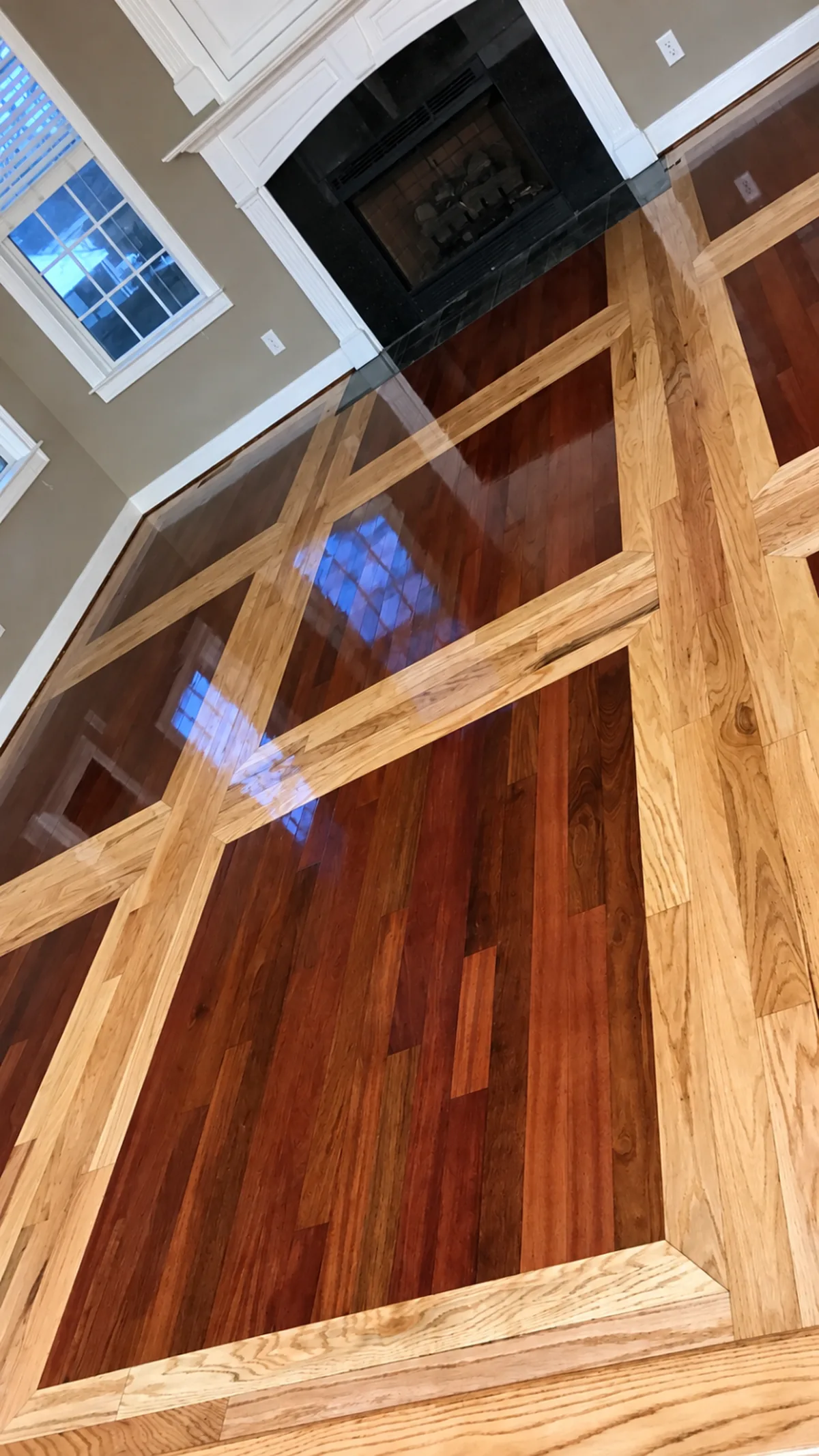 HAZA project
What it is
A fresh coat over a sound finish — not a reset.
We abrade the existing finish so a new coat can bond, clean the floor thoroughly, then lay fresh finish over it. The wood is never opened up, so there's no sanding dust, no bare-wood stage and far less time out of your rooms. What it can't do is remove damage: scratches in the wood, grey boards and water stains are all still there under the new coat.
Recoat while the finish is worn. Wait until it's worn through and your only option left is a full sand and refinish.
This is the right call when
- The floor looks dull, hazy or lightly scuffed all over
- Scratches don't catch your fingernail
- No grey, black or water-stained boards
- Finish is intact — nothing flaking, peeling or worn to bare wood
- You're keeping the color you already have
Look somewhere else when
- Bare wood showing through in traffic paths
- Grey or water-damaged boards that need to come out or be sanded
- Wax, oil soaps or unknown products used on the floor
- You want a different stain color — that requires sanding
The sequence
How a recoat day goes.
Short, contained and unglamorous. The two things that decide whether it succeeds both happen before any finish comes out of the can.
Test the finish
Adhesion and product compatibility checked in an inconspicuous spot. If it fails, we stop and talk about refinishing instead — before you've paid for a coat that will peel.
Clear and clean
Furniture out, floor cleaned down to remove anything that would stop a bond — and there's usually more of that than people expect.
Abrade
The existing finish is buffed to a uniform, keyed surface so the new coat has something to grab.
Coat
Fresh finish applied evenly, with the sheen agreed with you in advance.
Cure and return
You get walk-on, furniture and rug times in writing. Rugs are the one everybody rushes — and the one that traps a soft finish.
What moves the price
What changes a recoat number.
Fewer variables than a refinish, but they still matter.
Square footage
Straightforward on this job — more floor, more finish and more buffing time.
Layout and edges
Closets, stairs and tight rooms need hand work the machine can't reach.
How clean it starts
Heavy residue, kitchen grease or old cleaners add prep time before anything can bond.
Finish product and sheen
Product choice affects both cost and how long before furniture goes back.
Number of coats
One coat refreshes. A second buys more years, and adds cost and cure time.
Furniture
How much is in the room and who moves it.
Questions
Recoat questions.
How do I know if my floor qualifies?
Run a fingernail across a scratch. If it catches, the damage is in the wood and a recoat won't hide it. Send photos and we'll tell you before we come out.
Can I change the color with a recoat?
No. Color lives in the stain, under the finish. Changing it means sanding to bare wood.
How long until I can use the room?
Much sooner than a refinish, but the finish still needs to cure. You'll get specific walk-on, furniture and rug times for the product we use.
What if it can't be recoated?
We tell you at the test stage, not after. Then you can decide about a full sand and refinish with real information.
Does a recoat fix pet scratches?
Only the ones that are in the finish. Anything gouged into the wood stays, and will show through the new coat.
Next step
Send a photo.
Get a real number.
Two or three pictures of the floor, the rough square footage, and the room it's in. That's enough to tell you what the job actually involves before anyone quotes it.